





€0,00


Centrifuges
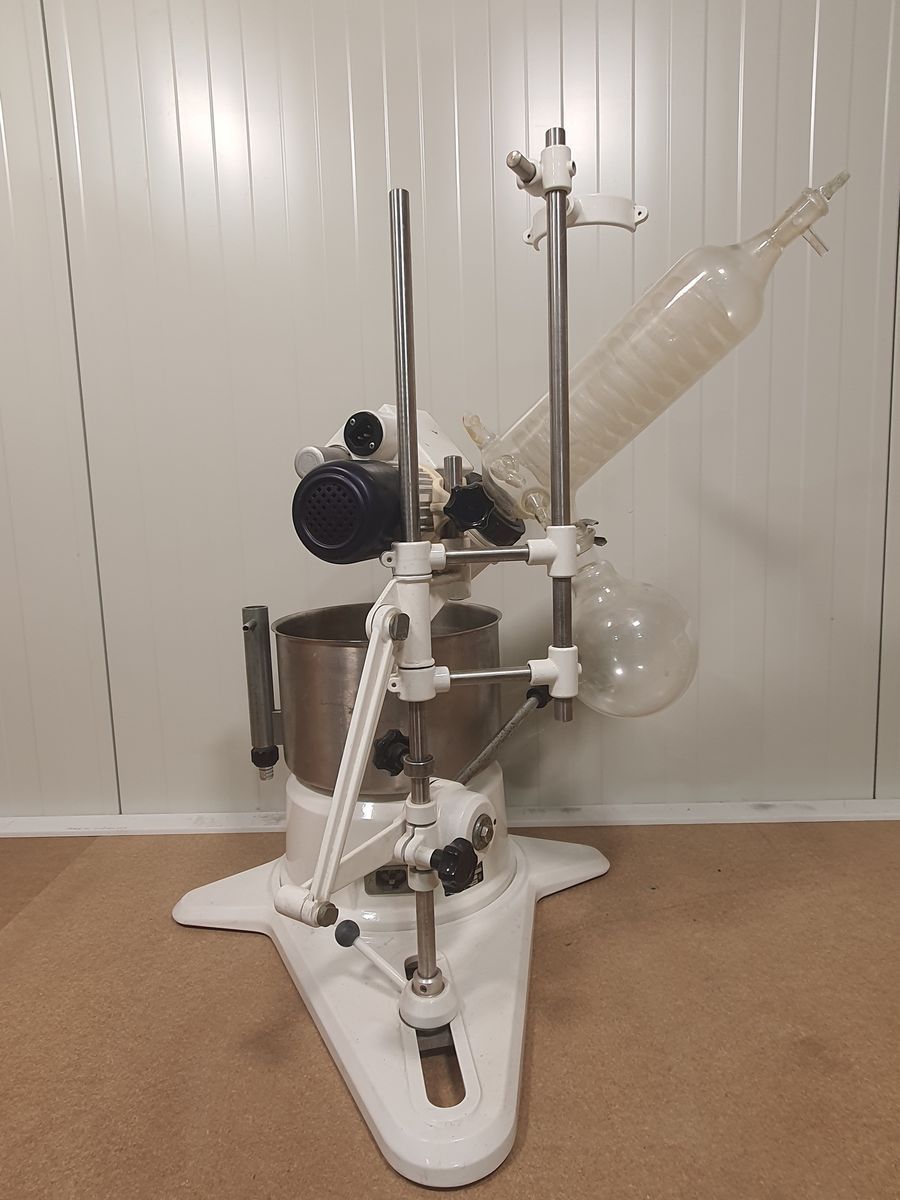
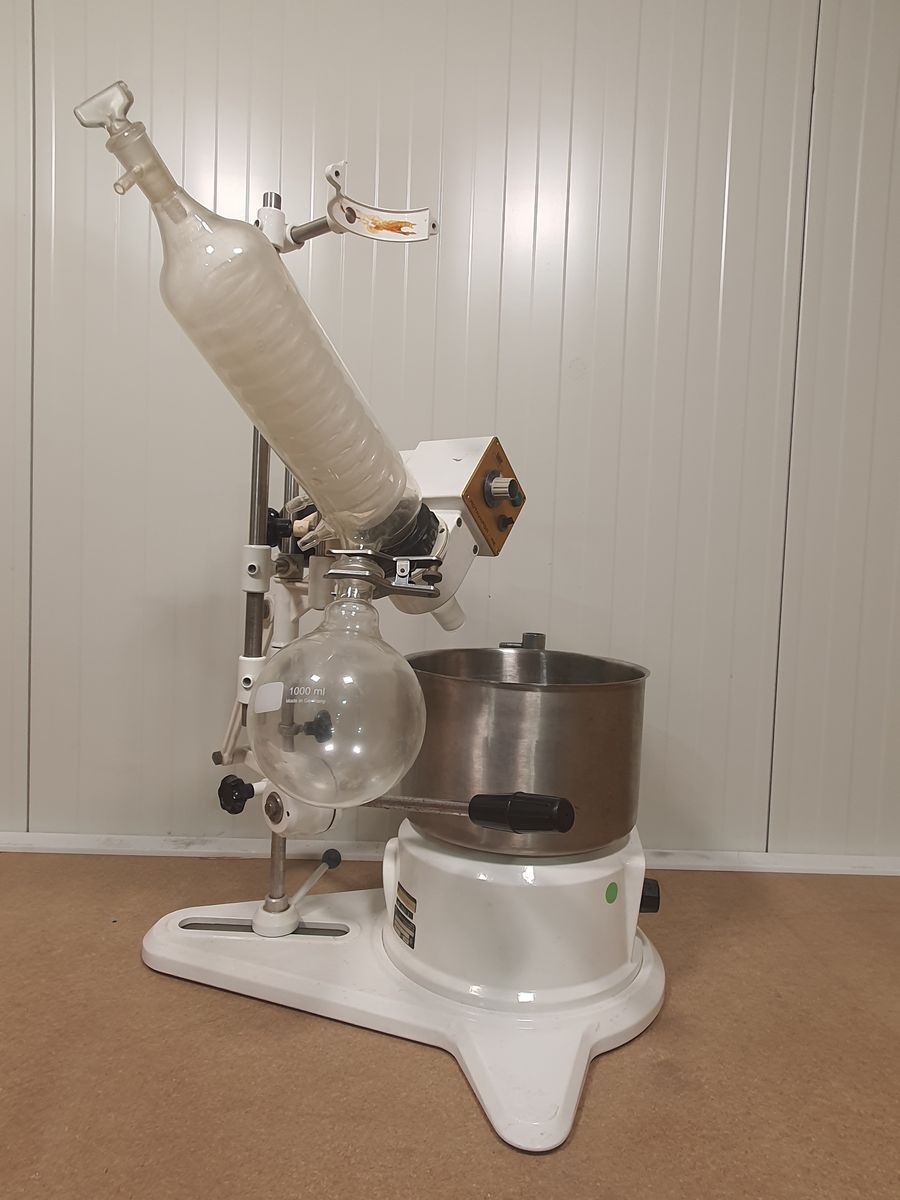
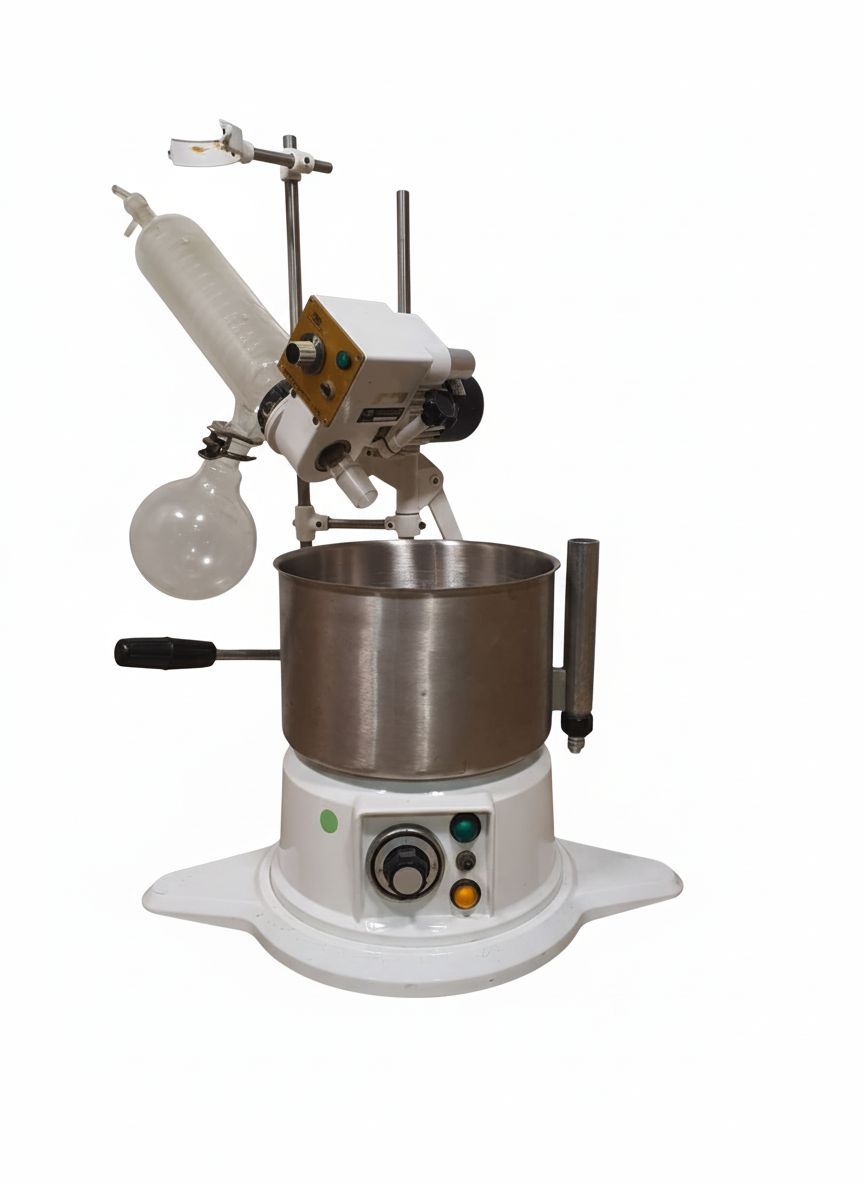
Buchi Rotavapor KRvrTD 65/45 w/ Heating Bath CH-9230
SKU: 8001
Op voorraad
Warranty Information
Belangrijk: Alle garanties zijn onze eigen garanties en dekken geen fabrieks- of fabrikantgaranties.
Büchi Rotavapor® rotary evaporator system: KRvrTD 65/45 evaporator head w/ Büchi CH-9230 heating bath
Description:
This is a classic Büchi Rotavapor® rotary evaporator system consisting of the KRvrTD 65/45 evaporator head, motor and stand, paired with a Büchi CH-9230 heating bath and complete glassware. Rotary evaporators like this are used to gently remove solvents from samples under vacuum, a staple in organic chemistry labs, pharmaceutical R&D, natural product isolation, and chemical synthesis.
The system lowers the boiling point of solvents via reduced pressure, rotates the flask to increase surface area, applies controlled heat via the bath, and condenses vapors with the glass condenser — efficiently concentrating or purifying samples.
Key Feature:
Rotary Evaporator (KRvrTD 65/45)
- Designed for laboratory distillation and solvent removal.
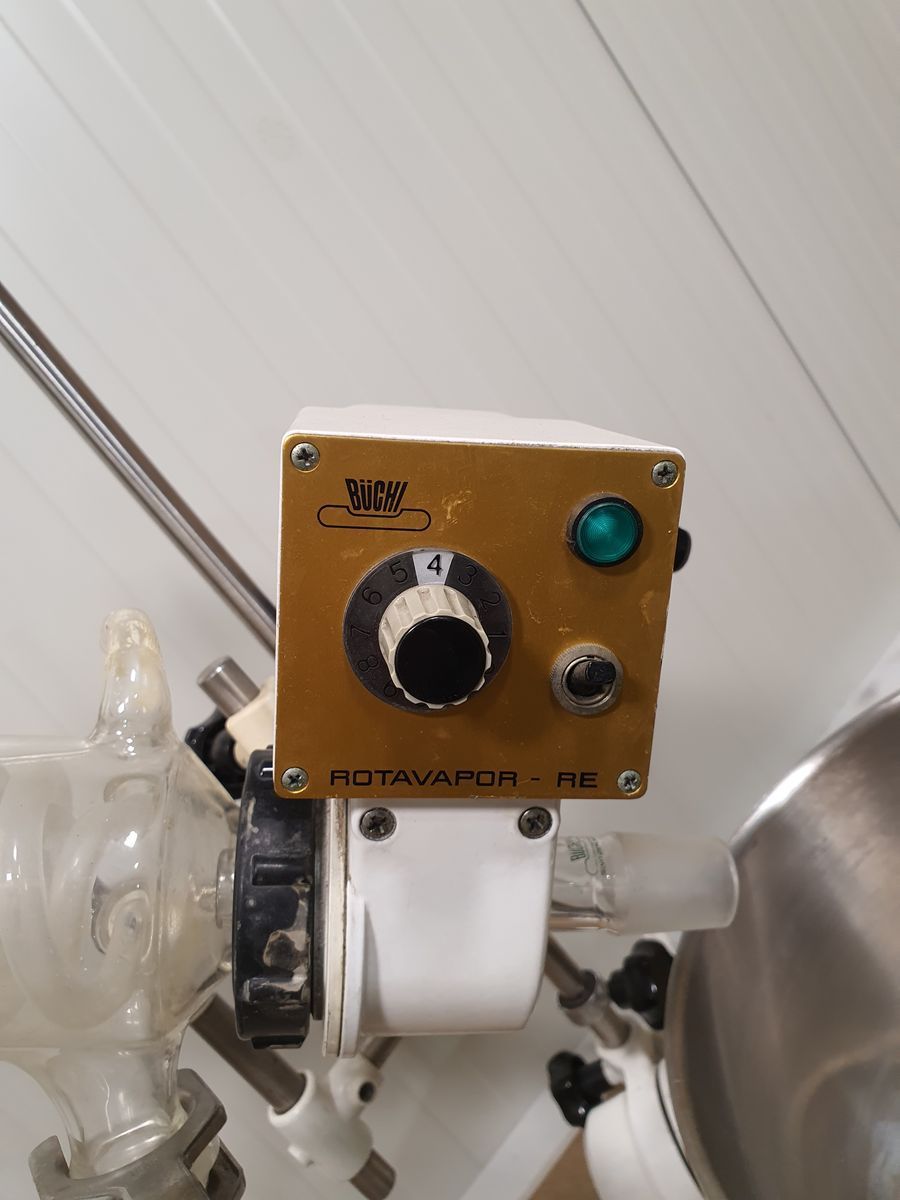
- Adjustable rotation speed for efficient evaporation.
- Works with standard ground-glass glassware (typically 29/32 joints and compatible flasks).
- Rugged vintage design — widely supported on used parts markets.
- Rotary systems from this era are generally manual lift (hand-adjustable) rather than electric.
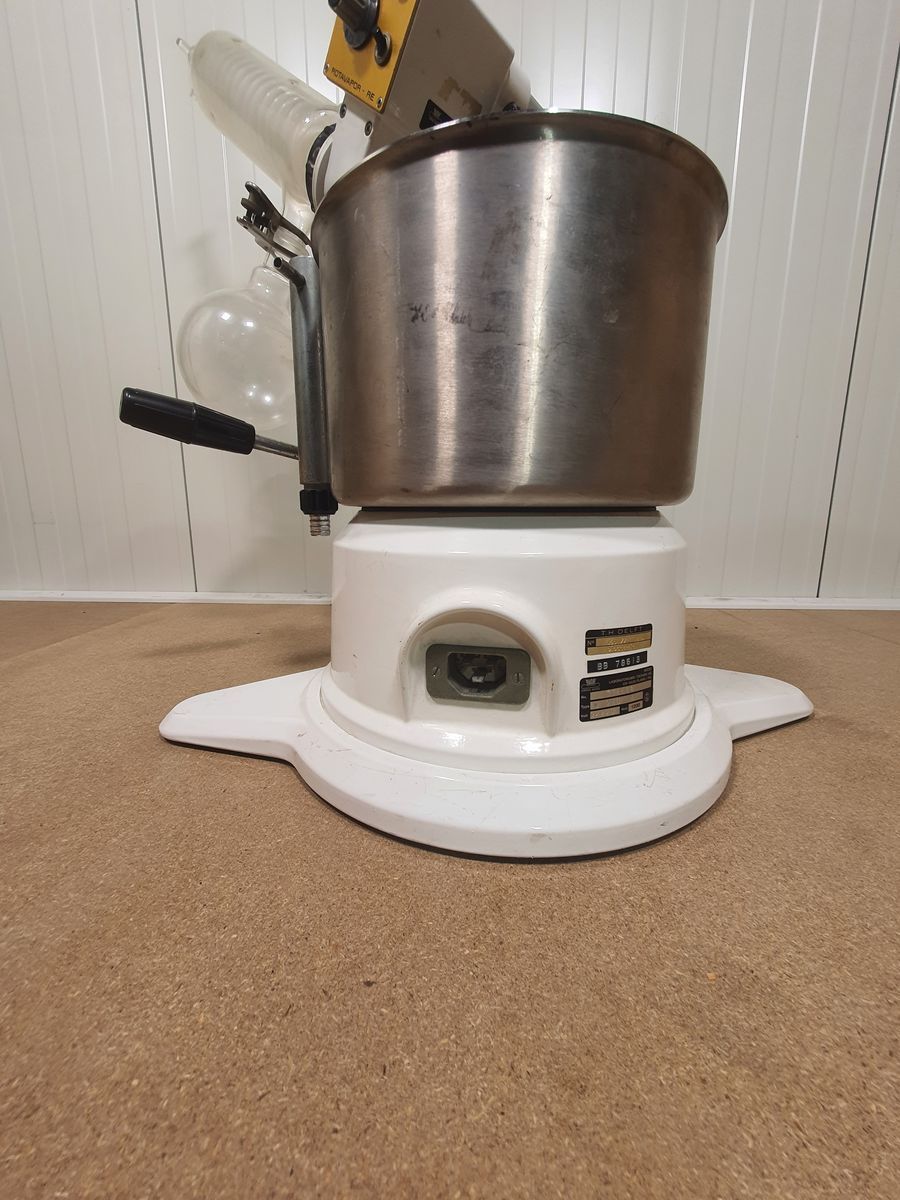
CH-9230 Heating Bath
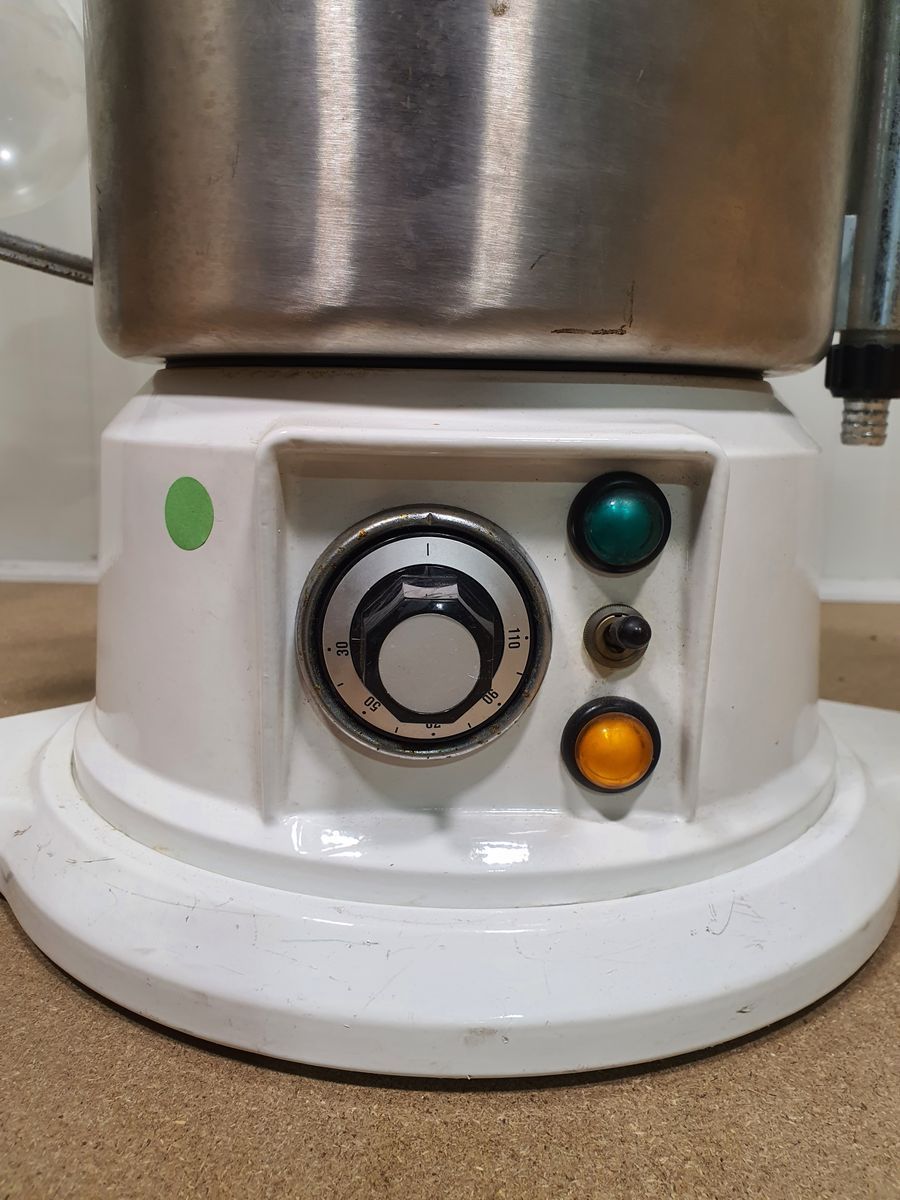
- Provides controlled heat for solvent evaporation.
- 220 V operation compatible with European lab infrastructure.
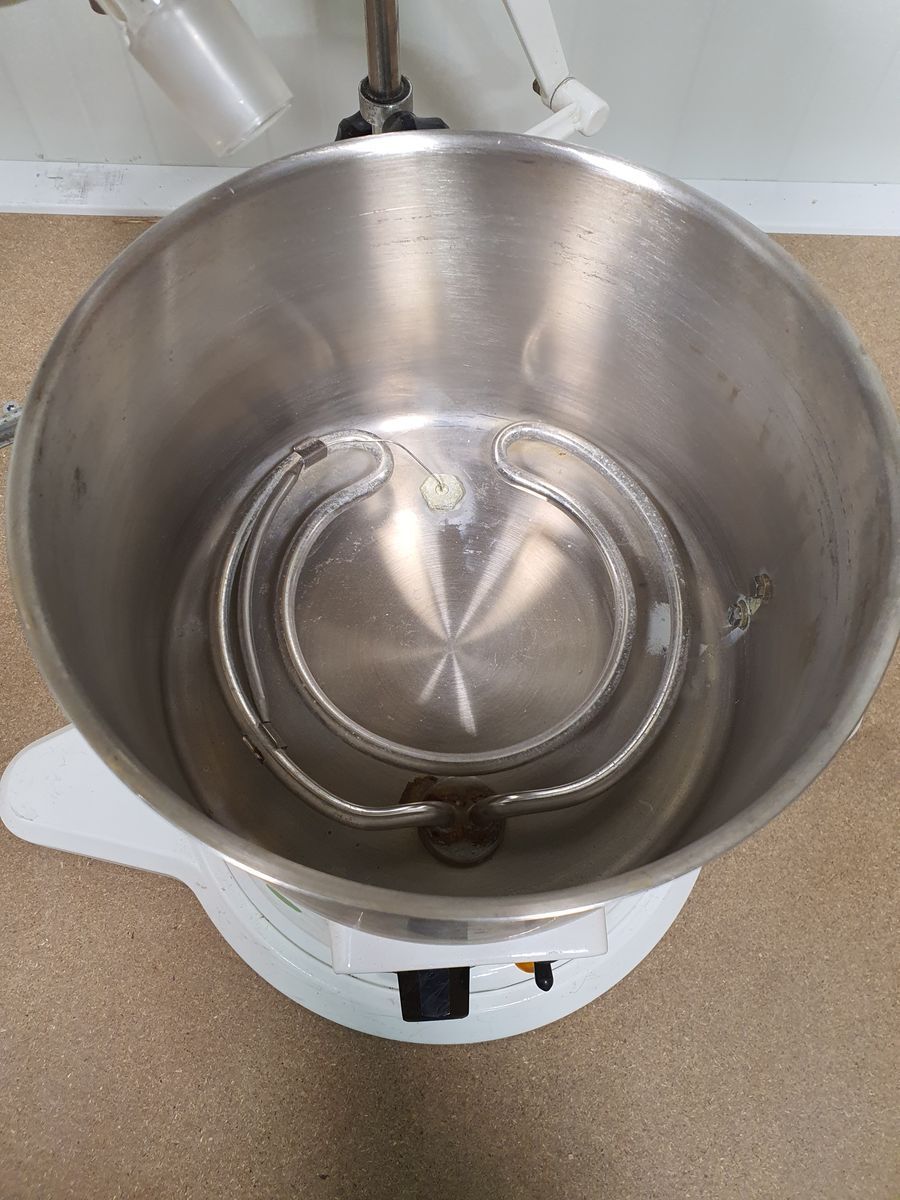
- Powerful heating element (≈1200 W), able to heat water/oil baths to typical rotovap temperatures.
Full Glassware Set (Included)
- Condenser(s), evaporating flask, receiving flask, seals, and connecting tubing included.
- Having full glassware adds practical value and saves on replacement costs.
Specifications:
- Rotary Evaporator
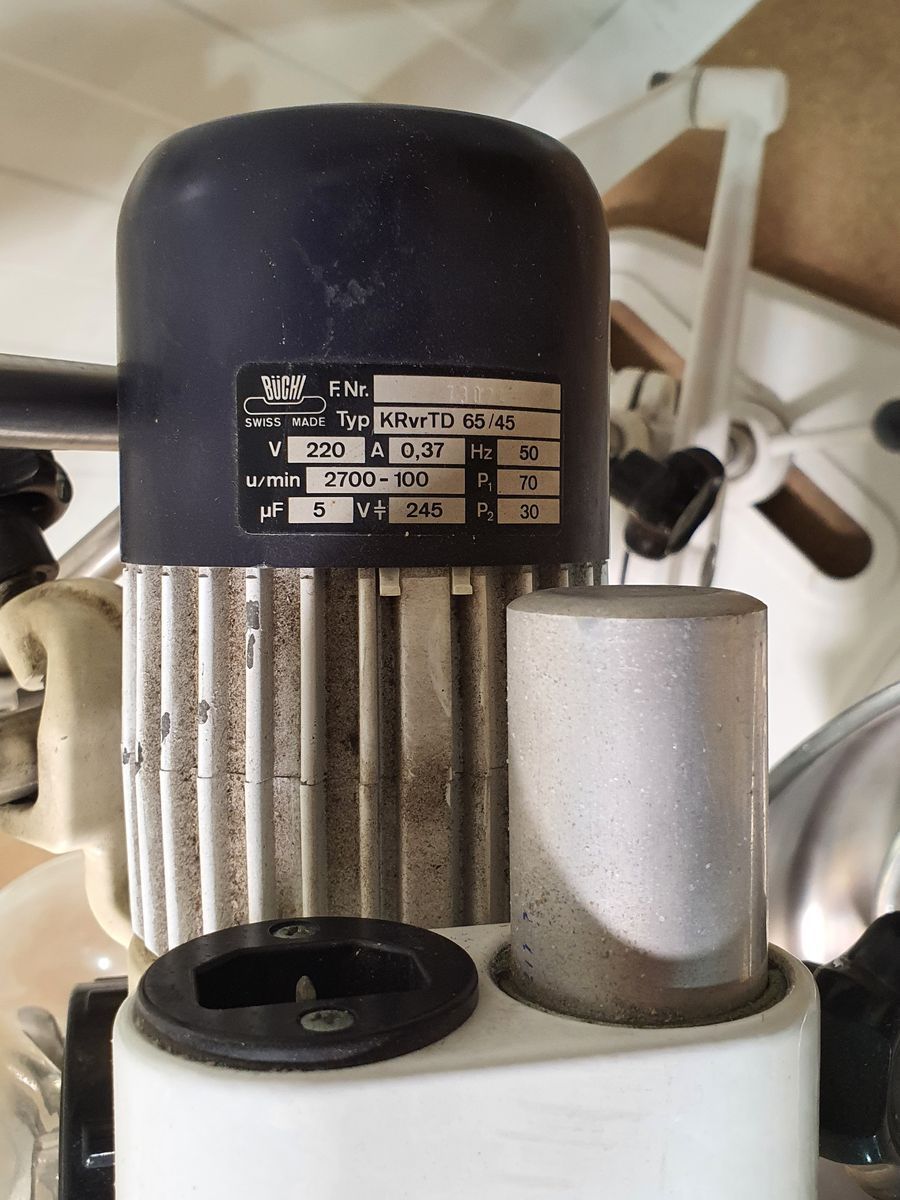
Mains: 220 V, 50 Hz
Motor current: ~0.37 A
Rotation speed: adjustable (~100–270 rpm range typical for older units)
Designed for medium-sized flasks (often 1–5 L depending on exact glass included)
Capacitor start/run: 5 mF
General lab power ratings (input/output P1/P2 as motor specs)
- Heating Bath (CH-9230)
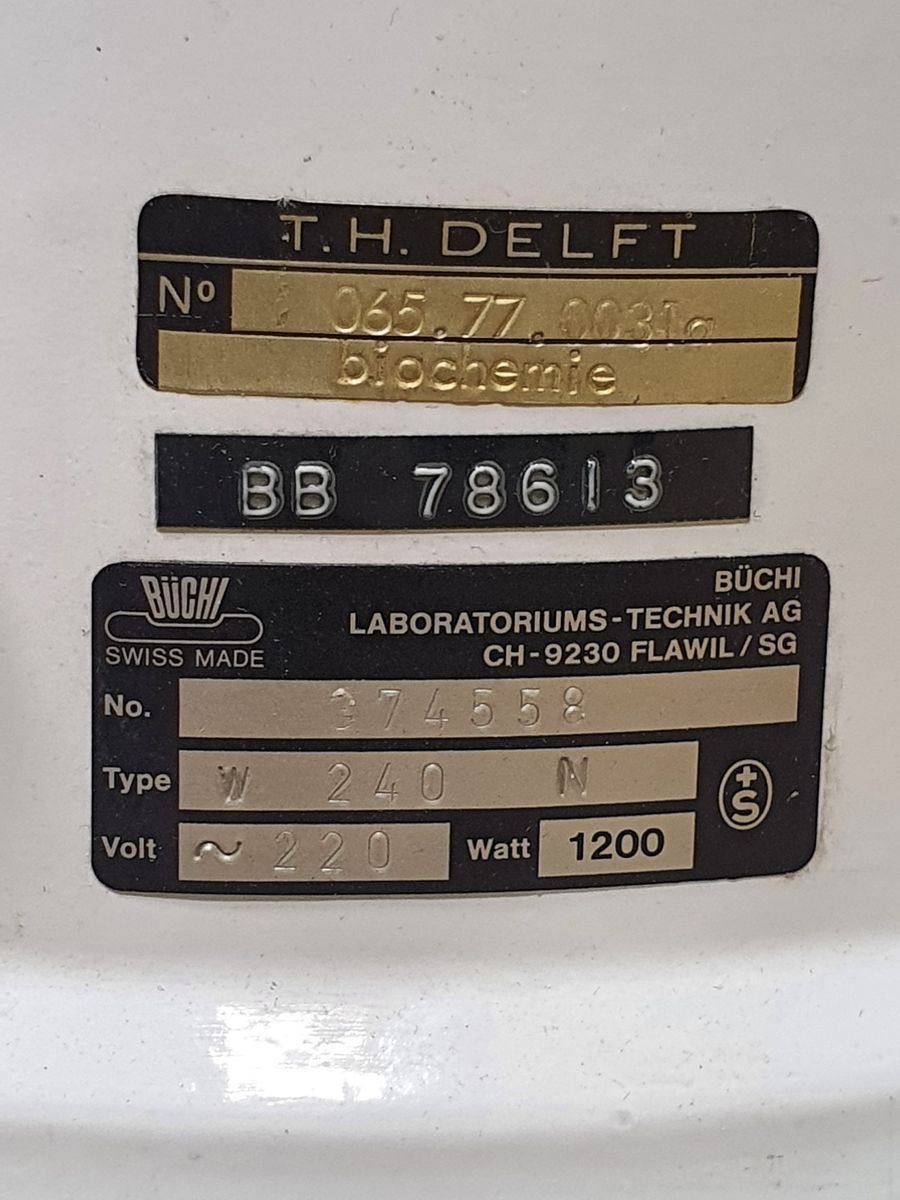
Volt: 220 V, ~1200 W
Type number: W 240 N
Suitable for water or oil up to desired test temperature range
Manual temperature control typical of classic baths
Typical Applications
✔ Removing solvents after synthesis (concentration of reaction mixtures)
✔ Gentle evaporation without thermal degradation of sensitive compounds
✔ Extracting natural products from plant material
✔ Sample prep for analytical instruments (NMR, LC/MS)
✔ Reclaiming/solvent recycling processes
✔ Teaching labs for distillation training
×
![]()
© Data Impact. Alle rechten voorbehouden.


